
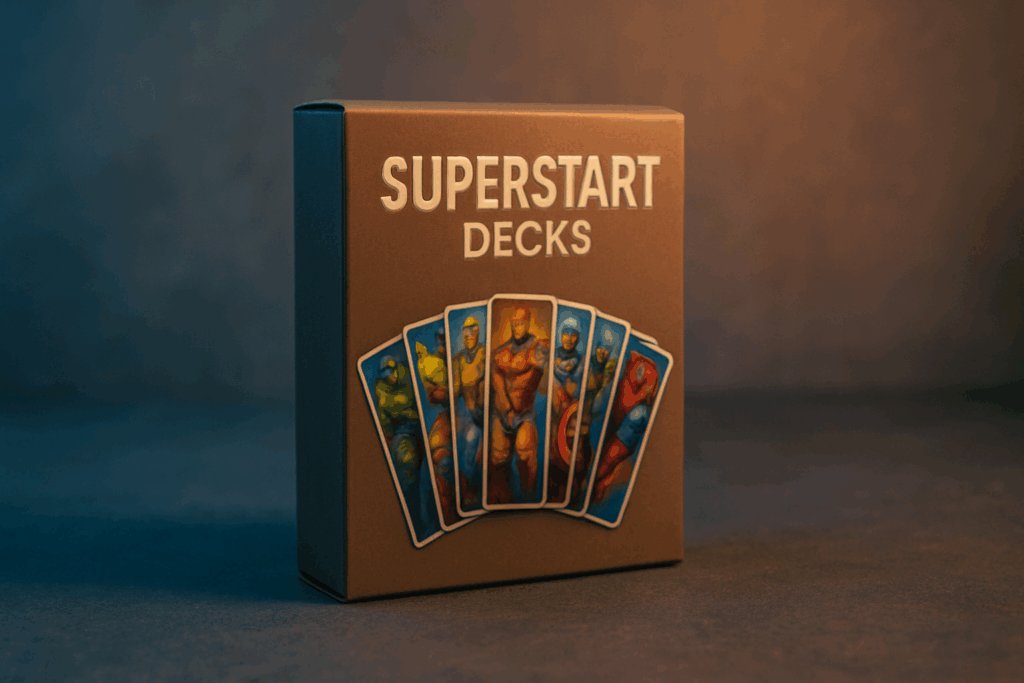
What Makes a “Beginner Friendly” Deck in 2026?
When starting out in Marvel Snap, the learning curve can be steep without the right deck. That’s why beginner friendly builds are designed with simplicity, synergy, and upgrade value in mind.
Key Traits of Beginner Friendly Decks
To ensure early success and fun, reliable decks for new players in 2026 share the following elements:
Low Curve Cards with Reliable Synergy
Focus on 1 to 3 cost cards that consistently offer value
Cards like Ant Man, Nightcrawler, and Sentinel play well together and fill the board efficiently
Early game synergy builds confidence and sets a strong foundation
Easy to Understand Mechanics
Avoid decks that rely on complex interactions or strict sequencing
Favor straightforward effects like On Reveal damage or passive Ongoing boosts
Clear abilities let new players focus on basic strategies like lane control
Mild RNG, Strong Early Control
Reduce reliance on unpredictable card effects early on
Control based cards like Lizard and Colossus help stabilize the board
These decks help you stay competitive even when card draws fluctuate
A Smooth Path to Upgrades
Beginner decks should use mostly Pool 1 and 2 cards easy to collect quickly
Leave room for growth by including one or two flexible slots
Upgrades can be made without needing rare or late pool cards early
The Takeaway
Focus on reliability, ease of use, and upgrade potential. A good beginner deck teaches you how to play well while giving room to grow as your collection expands.
On Reveal Burst Deck
Core Cards: Nightcrawler, Angela, Wolfsbane, White Tiger
This deck thrives on tactical sequencing. It’s built around On Reveal abilities cards that activate effects the moment they’re played. Your aim isn’t brute force, but smart spacing and turn timing. Angela grows stronger the more you play at her location, while Wolfsbane piles on extra power when stacked after two allies. Nightcrawler gives you mobility, and White Tiger sends a Tiger spirit to a random lane when played, helping you reach tough locations.
Where the deck really shines is in setting up a big final turn. Drop Odin onto your Tiger or Wolfsbane turn six to re trigger their On Reveal effects and swing control at the last second. Stick to low cost, high value cards early, build your board, then plan your endgame around surprise lane captures.
On Reveal decks teach the fundamentals: how to plan, how to predict, and how to manipulate board presence. For new players, it’s a simple starting point with enough ceiling to still feel sharp in higher ranks.
Building a Flex Slot
As you unlock more cards, your early decks don’t have to get tossed just tweaked. Think of deckbuilding like tuning a car: small adjustments, big results. Slots like Sentinel, Ironheart, or even The Thing often start strong but can be swapped out once you open stronger synergistic options. Cards like Polaris, Shang Chi, or Lizard can instantly boost both control and tempo without breaking your flow.
Matchups matter. Facing a destroy heavy meta? Bring in Armor to shut down Deadpool shenanigans. Getting outpaced by swarm or zoo decks? Killmonger becomes your best friend. Card count isn’t all; it’s how you answer what’s coming at you.
Locations are the wildcard. Flexible drops like Nightcrawler, Storm, or Jeff the Baby Land Shark let you pivot when an awkward location floods the board. Adapting means knowing your deck’s weak spots and planning for swing turns.
As for the wallet or lack of one stay smart with your collection path. Focus on upgrading cards you use consistently. Prioritize unlocking Series 2 staples like Killmonger or Shang Chi before chasing every shiny new combo. The goal isn’t to build the flashiest deck it’s to build the one that wins reliably, without draining your entire credit stash.
Build smart, pivot fast, and always leave room to flex.
Beginner Tips Beyond Deckbuilding

Understanding how to win in Marvel Snap goes beyond simply having a good deck. Your in game decision making plays a major role in how consistently you climb. Here are three crucial fundamentals every beginner should master early on:
Mastering Priority: When to Snap and When to Retreat
Priority the order in which cards reveal can often decide the outcome of a match. Knowing when you have it, and when to force or give it up, is key.
Snap when you’re ahead AND confident: If your board is strong going into Turn 5, assert pressure by snapping. It’s your chance to double rewards.
Retreat when the odds are stacked: Don’t hold out for miracle draws. If your opponent has priority and you’re behind with low upside, cut losses early.
Understand risk management: Learning when to commit to a game is just as important as building the right deck.
Reading Opponent Behavior
You can often deduce what kind of deck your opponent is playing before they reveal all their cards.
Track energy usage: If your opponent floats 1+ energy, they may be setting up a big combo or bluffing a reactive card like Shang Chi.
Note sequencing: Players who avoid playing to the center or hold back cards may be working toward Kwong style reveals or location specific triggers.
Predict card types by archetype cues: Angela plus Nightcrawler often signals On Reveal setups; Cable and Sentinel usually point to Dinosaur builds.
Location Awareness: Adapt Your Win Condition on the Fly
Locations can swing momentum, favoring different decks or card types based on what they enable or restrict.
Be flexible: Don’t stick to a rigid strategy. Adjust your lane focus and combos based on what each location encourages or punishes.
Capitalize on advantage: Cards like Mister Fantastic, Vision, or Nightcrawler help you adapt to awkward or locked down lanes.
Always scan for location based synergy or interference: If a location like “Sanctum Sanctorum” appears, plan for remote point generation or movement tactics.
These advanced but learnable habits will pay major dividends as you work your way up the pools and into tougher competition.
Play Smarter, Not Just Harder
Strategy isn’t just for card games. If you’ve been refining your decisions in Marvel Snap timing reveals, managing resources, adjusting on the fly you’ve already built habits that translate well across games. That same mindset can cut hours off grind heavy titles and give you an edge where most players just coast.
Looking to bring this kind of strategic awareness to other games? Check out these Genshin farming tips for more efficient gameplay habits and planning. It’s not just about firing off daily commissions it’s how you chain your routes, prep your characters, and track resources like a tactician. Learn the loop, own the loop. Everything gets cleaner from there.
Final Recommendations
When you’re just getting into Marvel Snap, don’t overcomplicate things. Stick with simple decks decks that focus on clear synergies and reliable plays. Trying to copy top meta builds packed with Pool 3+ cards you don’t own yet will only frustrate you. Start small, grow your arsenal slowly, and add complexity only when your card pool and experience level support it.
More important than rushing to climb is understanding the game’s core mechanics. How priority works. How locations affect tempo. What turn you should snap or retreat. That base knowledge is the foundation every future strategy stands on.
And don’t sleep on your own match history. Play replays in your mind. What did your opponent do that threw you off? What card was a game changer? Pattern recognition is a skill you sharpen by paying attention. Every win earns you cubes. Every loss gives you data. Both are valuable if you’re paying attention.
 Ask Lee Graysonickster how they got into esports coverage and updates and you'll probably get a longer answer than you expected. The short version: Lee started doing it, got genuinely hooked, and at some point realized they had accumulated enough hard-won knowledge that it would be a waste not to share it. So they started writing.
What makes Lee worth reading is that they skips the obvious stuff. Nobody needs another surface-level take on Esports Coverage and Updates, Player Strategy Guides, Latest Gaming News. What readers actually want is the nuance — the part that only becomes clear after you've made a few mistakes and figured out why. That's the territory Lee operates in. The writing is direct, occasionally blunt, and always built around what's actually true rather than what sounds good in an article. They has little patience for filler, which means they's pieces tend to be denser with real information than the average post on the same subject.
Lee doesn't write to impress anyone. They writes because they has things to say that they genuinely thinks people should hear. That motivation — basic as it sounds — produces something noticeably different from content written for clicks or word count. Readers pick up on it. The comments on Lee's work tend to reflect that.
Ask Lee Graysonickster how they got into esports coverage and updates and you'll probably get a longer answer than you expected. The short version: Lee started doing it, got genuinely hooked, and at some point realized they had accumulated enough hard-won knowledge that it would be a waste not to share it. So they started writing.
What makes Lee worth reading is that they skips the obvious stuff. Nobody needs another surface-level take on Esports Coverage and Updates, Player Strategy Guides, Latest Gaming News. What readers actually want is the nuance — the part that only becomes clear after you've made a few mistakes and figured out why. That's the territory Lee operates in. The writing is direct, occasionally blunt, and always built around what's actually true rather than what sounds good in an article. They has little patience for filler, which means they's pieces tend to be denser with real information than the average post on the same subject.
Lee doesn't write to impress anyone. They writes because they has things to say that they genuinely thinks people should hear. That motivation — basic as it sounds — produces something noticeably different from content written for clicks or word count. Readers pick up on it. The comments on Lee's work tend to reflect that.