
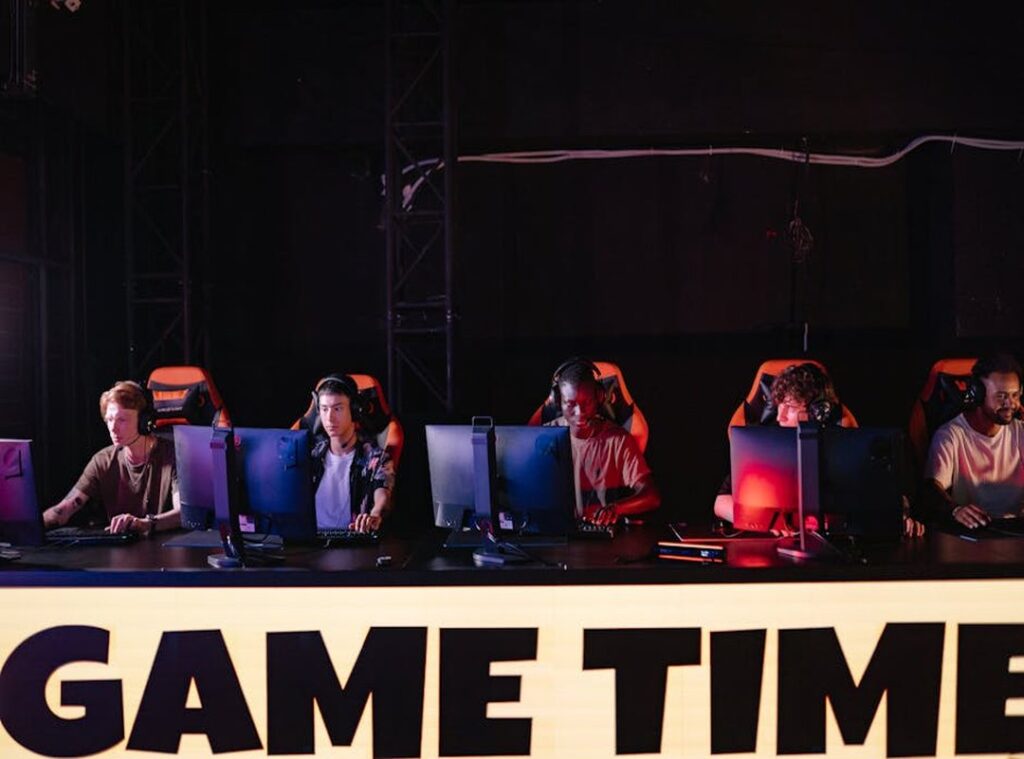
You’re tired of staring at faces in little boxes.
Tired of nodding along while your brain checks out.
I am too. And I’ve watched dozens of virtual events fail. Same slides, same awkward polls, same silence after the “fun” icebreaker.
The Online Gaming Event Thehakevent isn’t another Zoom clone with a game slapped on top.
It’s built from the ground up to make people move, laugh, and actually remember each other’s names.
I’ve run these sessions for schools, startups, and remote teams. Seen the shift happen live: passive viewers become players. Fast.
This article cuts through the hype. No fluff. Just how it works, what it feels like, and why it sticks.
You’ll know by the end whether it fits your group (or) not.
No sales pitch. Just real experience.
Thehakevent Isn’t Just Another Zoom Call
I’ve sat through enough webinars to know when something’s different.
Thehakevent is built for doing, not watching. You’re not stuck in a chair listening to slides. You’re playing, laughing, solving, competing (all) in real time.
Most virtual events treat you like a spectator. (Spoiler: it’s boring.)
This one treats you like a participant (and) a damn important one.
There’s a live host. Not a bot. Not a script reader.
A real person who reads the room, pulls quiet folks in, keeps energy up, and stops chaos before it starts.
That host is why your cousin who hates tech games ends up leading the final round.
It works for corporate teams that need real connection (not) forced icebreakers.
It works for friend groups that haven’t seen each other in months.
It works for families where teens normally vanish into headphones.
Read more about how it actually pulls this off.
The Online Gaming Event Thehakevent stands out because it replaces passive scrolling with shared momentum.
You remember what happened. You talk about it after.
That’s rare.
Most virtual stuff? You forget it by lunch.
Not this.
It’s interactive gameplay, period.
Games That Actually Work: No Fluff, Just Play
I’ve run dozens of these. Most online games crash by minute three. Not these.
High-energy team competitions get people moving fast. Like “Signal Relay”. One person sees a coded image, describes it to their teammate who draws it blindfolded, and the third person guesses the object.
You need speed, trust, and zero patience for overthinking. (Yes, it gets loud.)
Then there’s “Logic Lock,” where teams race to solve a physical-style puzzle box via shared screen control. It’s not about who types fastest. It’s about spotting patterns, delegating roles, and shutting down bad ideas before they waste 90 seconds.
Communication isn’t optional. It’s the timer.
Collaborative puzzle solving is quieter but no less intense. “Echo Chamber” drops teams into a mystery where every clue lives in a different chat thread (and) only one person per thread can type. You learn fast who listens, who summarizes, and who just repeats themselves.
Teams form automatically. No awkward self-selection. You land in breakout rooms with clear roles baked in.
Observer, scribe, decider. So no one stares at a mute button wondering what to do.
Some games use integrated chat only. Others demand shared whiteboards or live audio cues. None assume you’re all best friends already.
(Spoiler: you’re not.)
The variety isn’t accidental. There’s a game if you love trash-talking. One if you’d rather map out solutions on paper.
And yes, one if your idea of fun is slowly outsmarting everyone else.
The Online Gaming Event isn’t about filling time. It’s about picking a game that fits how your group actually talks, thinks, and screws up.
Pro tip: Skip the “icebreaker” version of anything. Go straight to the one that makes someone say Wait (how) did you see that?
The Tech Vanishes So You Don’t Have To

I hate tech that makes me think about tech.
This platform runs in your browser. No downloads. No installers.
No “please restart your computer” nonsense. (Yes, I’m looking at you, Zoom 2019.)
You open a link. You click play. That’s it.
The interface? Clean. Obvious.
Not cute (functional.) You see the live leaderboard right away. You spot the video tile grid without squinting. And if you’re running the game?
The game master’s control panel sits exactly where you need it. Not buried under three menus.
Here’s what matters: none of this should feel like tech.
It shouldn’t beep. It shouldn’t lag. It shouldn’t ask for permission to access your mic again.
That’s why the live support team jumps in before you even type “help.” And why every event has a human host watching the feed, muting audio spikes, swapping broken links on the fly.
You’re not here to debug. You’re here to laugh, compete, and yell at your cousin across the screen.
I’ve watched people forget they’re on Zoom. That’s the goal.
The Online Gaming Event Thehakevent nails this balance (no) surprise, since it’s built for players, not engineers.
Online gaming event thehakevent proves you don’t need flashy infrastructure to deliver real connection.
If your video freezes, someone fixes it. If your score doesn’t update, it’s corrected mid-round. If you’re confused?
A real person answers (fast.)
No jargon. No runbooks. Just play.
That’s not magic. It’s respect for your time.
More Than Just a Game: Real Value, Not Just Points
I stopped calling it “just fun” after the third team told me their sprint planning improved because of it.
The Online Gaming Event Thehakevent isn’t about high scores. It’s about what happens after the timer ends.
You see, most team-building feels like forced small talk over lukewarm coffee. This? People lean in.
They ask questions. They listen.
That quiet developer who never speaks in standups? She just coordinated three teammates through a timed logic puzzle (no) slides, no jargon, just clear direction.
That’s not fluff. That’s observable behavior shift.
Remote teams burn out because they forget they’re working with humans. Not avatars. Not Slack handles.
Thehakevent forces real-time collaboration without performance pressure. No one’s grading your typing speed or judging your camera lighting.
Morale isn’t some abstract HR metric. It’s whether people reply to your Slack message within five minutes. Or ghost for two days.
I’ve watched disengaged teams go from “meh” to “let’s do this again next month.” No survey required.
It works because it’s low-stakes but high-connection. You’re solving puzzles (not) pretending to care about someone’s vacation photos.
And if you’re still skeptical? Check out the full breakdown of why it stands out among virtual options: Best Online Gaming Event Thehakevent.
Skip the trust falls. Try this instead.
It’s not magic. It’s design.
People show up as themselves. That’s rare enough to matter.
Your Virtual Gathering Doesn’t Have to Feel Like a Chore
I’ve run too many Zoom calls that died after the first five minutes. You know the ones. Stiff.
Silent. Everyone muted and half-asleep.
That’s not connection. That’s just endurance.
The Online Gaming Event Thehakevent fixes it (no) gimmicks, no fluff. Real hosting. Real tech.
Real laughter. It’s not about winning a game. It’s about remembering who sat next to you when the trivia got weird.
You’re tired of forcing engagement.
So am I.
Let’s stop pretending virtual events have to suck.
They don’t.
Your team deserves better than another forgettable screen share. They deserve energy. They deserve surprise.
They deserve this.
Ready to book your next event? Go to thehakevent.com and pick a game. Get your quote in under two minutes.
We’re the #1 rated online gaming event for teams that hate “team building.”
Do it now.
 Ask Lee Graysonickster how they got into esports coverage and updates and you'll probably get a longer answer than you expected. The short version: Lee started doing it, got genuinely hooked, and at some point realized they had accumulated enough hard-won knowledge that it would be a waste not to share it. So they started writing.
What makes Lee worth reading is that they skips the obvious stuff. Nobody needs another surface-level take on Esports Coverage and Updates, Player Strategy Guides, Latest Gaming News. What readers actually want is the nuance — the part that only becomes clear after you've made a few mistakes and figured out why. That's the territory Lee operates in. The writing is direct, occasionally blunt, and always built around what's actually true rather than what sounds good in an article. They has little patience for filler, which means they's pieces tend to be denser with real information than the average post on the same subject.
Lee doesn't write to impress anyone. They writes because they has things to say that they genuinely thinks people should hear. That motivation — basic as it sounds — produces something noticeably different from content written for clicks or word count. Readers pick up on it. The comments on Lee's work tend to reflect that.
Ask Lee Graysonickster how they got into esports coverage and updates and you'll probably get a longer answer than you expected. The short version: Lee started doing it, got genuinely hooked, and at some point realized they had accumulated enough hard-won knowledge that it would be a waste not to share it. So they started writing.
What makes Lee worth reading is that they skips the obvious stuff. Nobody needs another surface-level take on Esports Coverage and Updates, Player Strategy Guides, Latest Gaming News. What readers actually want is the nuance — the part that only becomes clear after you've made a few mistakes and figured out why. That's the territory Lee operates in. The writing is direct, occasionally blunt, and always built around what's actually true rather than what sounds good in an article. They has little patience for filler, which means they's pieces tend to be denser with real information than the average post on the same subject.
Lee doesn't write to impress anyone. They writes because they has things to say that they genuinely thinks people should hear. That motivation — basic as it sounds — produces something noticeably different from content written for clicks or word count. Readers pick up on it. The comments on Lee's work tend to reflect that.