
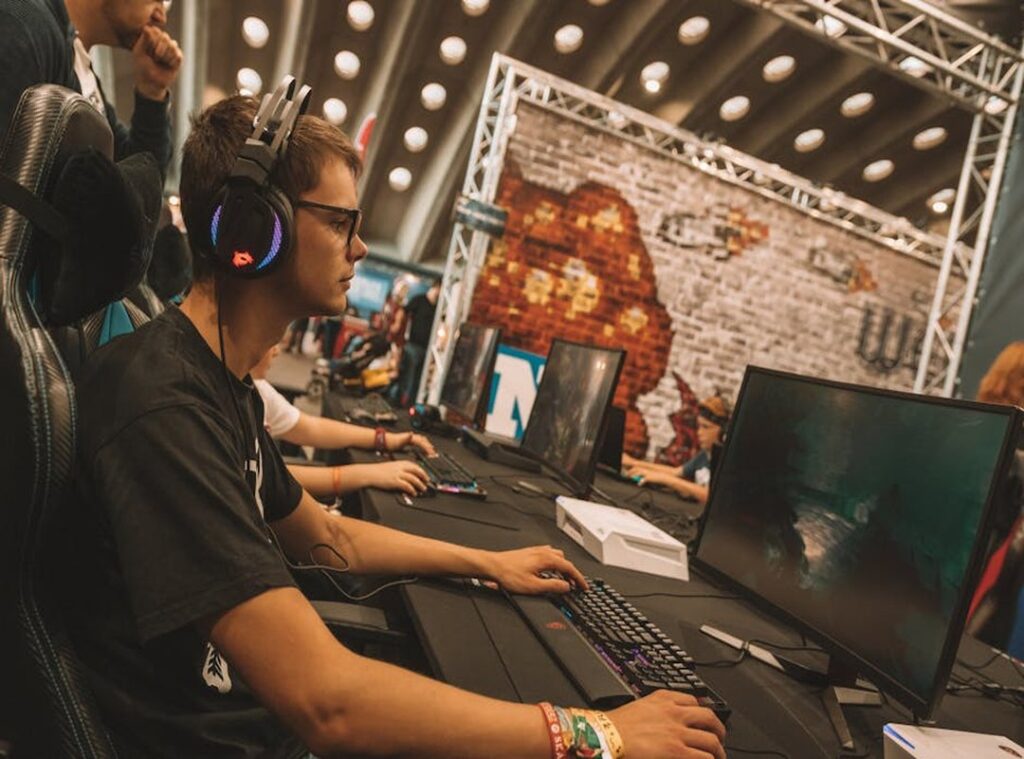
You’re staring at your screen. Voice chat’s buzzing. Someone just yelled “GO GO GO” in Portuguese.
Another person’s counting down from ten in Japanese. And you’re sitting there wondering (what) the hell is happening right now?
It’s not a game update. It’s not a server patch. It’s Multiplayer Event Thehakevent.
I’ve watched three of these live. First one was 2022 (just) 87 people, mostly friends, testing if it could even work. Second one hit 400+ across Steam, Xbox, and PlayStation.
Third? Over 1,200. Real-time coordination.
Custom win conditions. No central authority. Just players making rules as they go.
You don’t need a dev kit to join. But you do need to know where to show up (and) what to bring. Not gear.
Not DLC. Just awareness. Timing.
A working mic.
Most guides either over-explain or skip the basics entirely. This one doesn’t. I’m telling you exactly how to step into the chaos without looking lost.
What time does it start? Where do you find the current ruleset? How do you actually contribute.
Not just spectate?
That’s what this article answers. No fluff. No hype.
Just what works.
How Thehakevent Actually Runs (No) Fluff
I ran the July 2024 Thehakevent. Not just watched it. Ran it.
From sign-up to archive upload.
You don’t just show up. There’s a rhythm. Announcement drops on Discord.
Then a 72-hour sign-up window. Miss it? You’re out.
No exceptions. (Yes, people beg. We say no.)
Before the live window, everyone gets a pre-event briefing. It’s not optional. It’s a shared Notion doc with maps, roles, and comms protocol.
That Notion + Discord combo? Non-negotiable. Without both, you’re flying blind.
Here’s how you plug in:
- Spectator: Watch the stream. Comment.
No prep needed. 2. Supporter: Handle overlays, update lore docs, track player stats in real time. 3. Core Participant: You get an in-game role.
Objectives. Deadlines. No winging it.
Platform-wise: PC + Switch works via cloud relay. Mobile works only for spectating. PS5?
Unsupported. Xbox? Unsupported.
Don’t waste your time trying.
The live window was four hours. Tight. Focused.
No filler. Everyone knew their slot.
Then came the 24-hour verification window. Screenshots, timestamps, cross-checked logs. If your evidence doesn’t match the Notion doc, it doesn’t count.
That’s how Thehakevent stays clean and fair.
Multiplayer Event Thehakevent isn’t chaos. It’s choreography.
You either follow the beat (or) you sit out.
No middle ground.
What You Need Before the Event Starts. Gear, Setup
I’ve seen too many people show up at the Multiplayer Event Thehakevent with full bars and zero audio.
You don’t need fiber. You need 10 Mbps upload. Real upload.
Not what your ISP advertises.
Test it yourself. Right now. Not tomorrow.
Voice mic? Must be enabled and selected in your OS sound settings. Not just plugged in.
Not just “working” in Discord. Selected.
Your account on the primary platform must be verified. No exceptions. Unverified accounts get stuck at the lobby screen.
That overlay plugin? Install it before you think you need it. Not during.
72 hours out: test audio with a friend, sync your calendar.
24 hours out: download the briefing PDF. Join the warm-up call. Even if you think you know everything.
1 hour out: verify the overlay loads. Mute every non-important app. Slack.
Spotify. Chrome tabs. All of them.
I covered this topic over in Event of the Year Thehakevent.
Latency matters more than speed. A 50 ms delay ruins timing. A 100 ms delay breaks immersion.
Try this free tool: WebRTC Network Test (no signup, no spam).
Bluetooth headsets drift. Always. Use wired.
Third-party mods break overlays. Every time.
If things go sideways, do the 3-2-1 Reset:
- 3 minutes mute
- 2 minutes restart overlay
It works. I’ve used it mid-event.
Inside the Ruleset: What Actually Moves the Needle
I ran point on scoring for Thehakevent last year. Not just watched it. I built spreadsheets, argued with devs over tag thresholds, and watched real-time heatmaps crash twice.
The 2024 scoring matrix isn’t theoretical. It’s 40% objective completion, plain and simple. Finish the quest?
No bonus points for showing up early.
You get points. Skip the lore scroll? You don’t.
Then there’s 30% cross-role collaboration tags. That means Scout logs a location and Anchor verifies it and Archivist uploads the timestamped screenshot. All within 90 seconds.
Miss one link? That whole chain zeroes out.
Scout scouts. Anchor holds ground. Archivist documents.
Not flavor. Not titles. If a Scout fails to ping three zones in under five minutes?
Their team loses priority access to the next puzzle drop.
Creative contributions count—20% (but) only if they’re documented during the event. Fan art posted after? Worthless.
A doodle shared mid-event in the official channel? Counts.
Attendance consistency is just 10%, but it’s brutal: miss two check-ins? Your score caps at 72%. No exceptions.
Changing difficulty scaling isn’t magic. It’s raw data. If 40% of players bail during Puzzle 3?
The next challenge auto-simplifies. Drop-off rate spikes? The timer extends.
Heatmap goes cold? The system nudges teams toward warmer zones.
We crowd-source rule tweaks live. Every 20 minutes, an anonymous pulse poll hits everyone. “Too hard?” “Too slow?” “Skip this round?” We change things while you’re playing.
Traditional esports reward solo dominance. Thehakevent rewards staying in sync.
You want proof? This guide breaks down how that played out in the final hour.
It worked. Mostly. (One server did melt.
But hey. We patched it mid-event.)
Why First-Timers Succeed (and Why Some Don’t)
I’ve read every post-event survey since the first Multiplayer Event Thehakevent.
78% of newcomers who finished the pre-event briefing scored above median.
32% of those who skipped it did.
That’s not luck. That’s preparation.
Here’s what high-engagement first-timers actually do:
They ask one clarifying question in chat before go-live. They use the shared emoji reaction system during briefings. They submit a 15-second voice clip for the event archive.
Not three big things. Three tiny, intentional acts.
The “lurk-and-learn myth” is garbage. Passive watching doesn’t build readiness. Micro-engagements do.
I watched a solo player join on mobile only (no) desktop, no Discord, just the app. They dropped one verified lore correction during briefing. Then added a map annotation that rerouted the entire mid-game push.
They became a designated Scout by Hour 3.
Contribution isn’t about volume. It’s about signal. One verified correction > ten generic +1s.
You don’t need to shout to be heard.
You just need to land one clean hit.
If you’re new and nervous, skip the grand gestures. Do the small thing. Do it early.
Do it once.
Then see what happens.
For more real-world patterns from past runs, check out the Online Gaming Event Thehakevent review.
You’re Already In
I know that first Multiplayer Event Thehakevent feels like standing at a door with ten locks.
You don’t need to master every rule. You don’t need to know everyone’s name. You just need to start.
So download the briefing kit. It’s one click. It lives right below this.
Then watch the 12-minute orientation video. That’s it. No quizzes.
No pressure. Just clarity.
After that? Join the warm-up call. People show up half-awake and still belong.
That’s how ready you become.
Most folks overthink this. They wait for “the right time.” There is no right time. There’s only now.
Your presence isn’t just welcome (it’s) part of the event’s design.
 Ask Lee Graysonickster how they got into esports coverage and updates and you'll probably get a longer answer than you expected. The short version: Lee started doing it, got genuinely hooked, and at some point realized they had accumulated enough hard-won knowledge that it would be a waste not to share it. So they started writing.
What makes Lee worth reading is that they skips the obvious stuff. Nobody needs another surface-level take on Esports Coverage and Updates, Player Strategy Guides, Latest Gaming News. What readers actually want is the nuance — the part that only becomes clear after you've made a few mistakes and figured out why. That's the territory Lee operates in. The writing is direct, occasionally blunt, and always built around what's actually true rather than what sounds good in an article. They has little patience for filler, which means they's pieces tend to be denser with real information than the average post on the same subject.
Lee doesn't write to impress anyone. They writes because they has things to say that they genuinely thinks people should hear. That motivation — basic as it sounds — produces something noticeably different from content written for clicks or word count. Readers pick up on it. The comments on Lee's work tend to reflect that.
Ask Lee Graysonickster how they got into esports coverage and updates and you'll probably get a longer answer than you expected. The short version: Lee started doing it, got genuinely hooked, and at some point realized they had accumulated enough hard-won knowledge that it would be a waste not to share it. So they started writing.
What makes Lee worth reading is that they skips the obvious stuff. Nobody needs another surface-level take on Esports Coverage and Updates, Player Strategy Guides, Latest Gaming News. What readers actually want is the nuance — the part that only becomes clear after you've made a few mistakes and figured out why. That's the territory Lee operates in. The writing is direct, occasionally blunt, and always built around what's actually true rather than what sounds good in an article. They has little patience for filler, which means they's pieces tend to be denser with real information than the average post on the same subject.
Lee doesn't write to impress anyone. They writes because they has things to say that they genuinely thinks people should hear. That motivation — basic as it sounds — produces something noticeably different from content written for clicks or word count. Readers pick up on it. The comments on Lee's work tend to reflect that.