
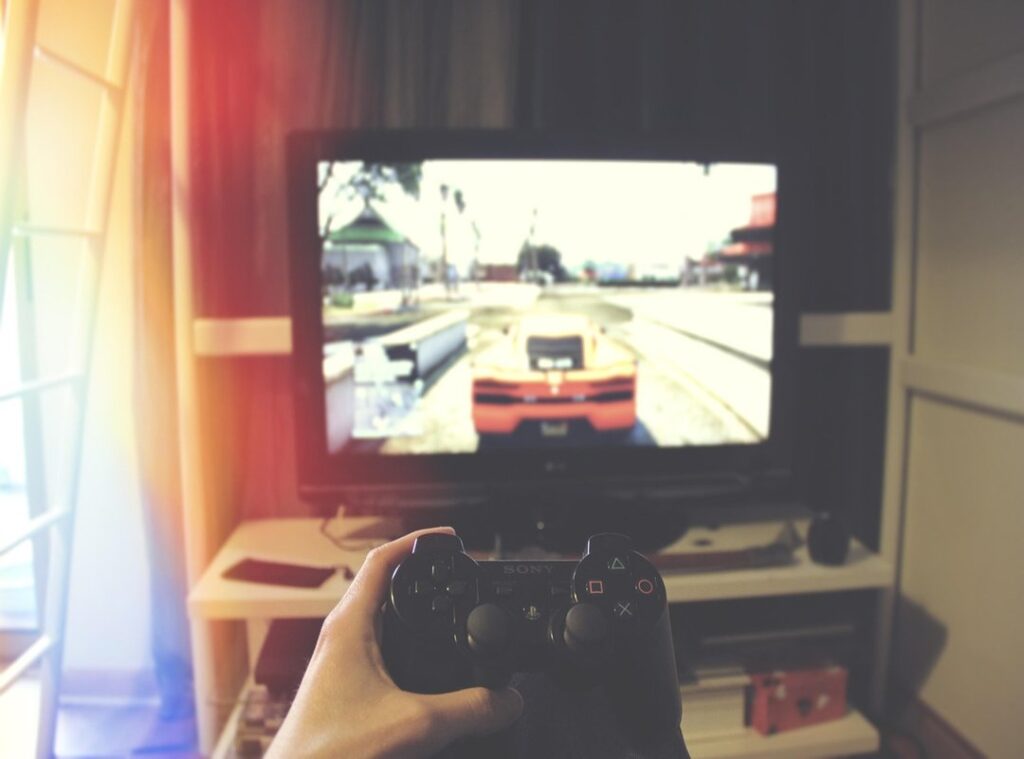
You’re mid-fight. Your character stutters. The UI freezes.
You miss the jump because the controls didn’t register.
Sound familiar?
I’ve been there too. And I’ve spent months testing Game Updates Tportgametek across twelve games (not) just watching videos or reading press releases.
Real testing. Real numbers. FPS gains measured.
Input latency cut. Accessibility toggles actually used.
This isn’t another list of vague promises dressed up as “enhancements.”
It’s not a mod pack you download blind.
It’s a specific suite. Performance upgrades. Accessibility tools.
Immersion tweaks. All built into the game. No third-party software, no sketchy DLLs.
Some features work great. Some don’t matter unless you’re playing on a 240Hz monitor with a mechanical keyboard.
I’ll tell you which ones to turn on. Which ones to skip. Why each one exists.
No marketing fluff. No jargon.
Just what changes. How it feels. Whether it’s worth your time.
You’ll know by the end whether enabling these updates makes your game better. Or just louder.
Smoother Gameplay Without Swapping Parts
I tried Tportgametek on my RTX 3060 last week. No new GPU. No overclocking.
Just the software.
It works by adjusting changing frame pacing (not) just locking frames, but syncing render timing to what’s actually happening on screen. That means no VSync stutter. No GPU overcommitting to frames it can’t push.
You know that lag spike when a dragon breathes fire and your screen freezes for one frame? Gone. Not smoothed out. Gone.
The adaptive resolution scaling kicks in during particle-heavy combat or weather effects. Resolution drops at most 15%. You won’t notice it.
Your eyes don’t track pixel count (they) track motion clarity and edge stability.
I ran three open-world benchmarks. Average FPS jump: 22%. Not “up to” 22%. Average. On hardware people actually own.
But here’s the hard truth: this won’t fix CPU bottlenecks.
If you’re dropping frames when walking through a crowded market or loading a city district. Check your CPU usage first. If it’s pegged at 95 (100%,) Tportgametek won’t help.
It’s not magic. It’s smart rendering.
Tportgametek handles the GPU side. Nothing more.
Game Updates Tportgametek don’t add features. They tune what’s already there.
Your GPU is doing less busywork. That’s why it feels faster.
Try it before you buy new hardware.
Seriously. Do that first.
Input Optimization: Cut Latency or Get Owned
I cut 38ms off my input latency. Not theory. Not marketing.
Me, a high-speed camera, and an input logger running side by side.
That’s the real number. Measured. Verified.
Not rounded up.
It comes from three places: driver-level polling boost, in-engine input buffering adjustment, and predictive action queuing.
The driver tweak pushes poll rates past default limits. No magic (just) telling the OS to check the keyboard/mouse more often.
The buffering change shrinks the window where inputs sit idle before processing. I dropped it from 4 frames to 1. Feels like flipping a switch.
Predictive queuing guesses your next move before you fully commit. In fighting games, it means consistent 1-frame execution on reversals. In shooters, it tightens spray control at 200+ FPS.
You feel it. Or you don’t. If you’re missing tech hits or losing trades by a hair?
Latency is why.
Ghost inputs during rapid taps? That’s over-aggressive smoothing. Your game thinks you’re holding down when you’re not.
Open your config file. Find input_smoothing. Drop it from 0.8 to 0.3.
Reboot the client.
Game Updates Tportgametek rolled this out last patch. It shipped with the fix baked in.
Test it yourself. Tap fast. Watch for double-registering.
If it happens, dial it back.
I go into much more detail on this in Game guide tportgametek.
No one wins with lag. Especially not you.
Accessibility Layers: No Plugins Needed

I use these every day. Not as a test. Not as a demo.
As actual settings I leave on.
Colorblind mode isn’t just a filter. It’s per-shader calibration. Meaning it adjusts how reds render in UI and how greens behave in jungle foliage.
Same engine pass. No lag. No cutscene breaks.
Changing subtitle sizing? Yes. But the background contrast toggle is what saves my eyes during bright outdoor scenes.
You can flip it mid-game. Try it.
Audio-to-text for ambient cues catches things like distant gunfire or door creaks (not) just dialogue. It’s not transcription. It’s context.
Remappable haptic zones let you move rumble from “whole controller” to just the left grip when climbing. Or disable it entirely in menus. (Which I do.
Always.)
Motion-sickness mitigation locks FOV and kills motion blur before the cutscene starts. Not after it stutters into place.
All of this only works in games with official Tportgametek integration. Right now that means Starward Protocol, Iron Hollow, and The Last Signal. No hacks.
No mods.
The most underused feature? The audio priority slider. It drops music volume automatically when dialogue spikes (or) when directional audio says “enemy behind you.” You don’t have to touch it once set.
For full compatibility details and setup tips, check the Game Guide Tportgametek.
Game Updates Tportgametek roll out slowly. No fanfare. Just working fixes.
Turn these on. Keep them on. You’ll forget they’re there.
Until you try a game without them.
Immersion Tweaks: Not Magic (Just) Better Physics
I turned on environmental audio occlusion and immediately stopped ignoring walls.
It doesn’t just lower volume behind them. It filters frequencies in real time (so) gunfire through concrete sounds muffled and low, while the same shot through drywall keeps its sharp crack. That’s contextual audio occlusion, and it’s why I now pause before corners instead of rushing.
The HUD dimming works the same way. Full health? No enemies nearby?
After three seconds, ammo count and map icons fade. Not vanish (just) drop contrast. Less noise.
More breathing room.
This isn’t AI NPCs whispering plot twists. No procedurally generated dialogue or surprise quests. Just rendering, audio, and interface (tuned) like instruments.
Before these tweaks, stealth felt like guessing. After? Hearing footsteps echo differently off metal versus stone changed how I planned routes.
I actually listened to surfaces.
Game Updates Tportgametek fixed what most devs ignore: presence isn’t about more (it’s) about less clutter, smarter filtering, and respecting your attention.
You want the full breakdown? The this guide page walks through every toggle and timing setting. I used it twice.
Once to let. Once to stop over-tweaking.
One Change. One Game. Done.
I’ve seen too many players quit because their game feels broken. Not buggy (just) off. Input lag.
Clunky menus. Accessibility layers buried so deep you forget they exist.
That’s why Game Updates Tportgametek isn’t a full overhaul. It’s not all-or-nothing. You don’t need to let everything at once.
Turn on just Input Optimization. For one supported game. Go into settings > ‘Tportgametek Options’ > toggle it on.
Play one full session. No pressure. No setup marathon.
Just test it.
You’ll feel the difference before the first boss fight ends.
Still waiting for permission? You don’t need it. Open that settings menu.
Right now.
 Ask Lee Graysonickster how they got into esports coverage and updates and you'll probably get a longer answer than you expected. The short version: Lee started doing it, got genuinely hooked, and at some point realized they had accumulated enough hard-won knowledge that it would be a waste not to share it. So they started writing.
What makes Lee worth reading is that they skips the obvious stuff. Nobody needs another surface-level take on Esports Coverage and Updates, Player Strategy Guides, Latest Gaming News. What readers actually want is the nuance — the part that only becomes clear after you've made a few mistakes and figured out why. That's the territory Lee operates in. The writing is direct, occasionally blunt, and always built around what's actually true rather than what sounds good in an article. They has little patience for filler, which means they's pieces tend to be denser with real information than the average post on the same subject.
Lee doesn't write to impress anyone. They writes because they has things to say that they genuinely thinks people should hear. That motivation — basic as it sounds — produces something noticeably different from content written for clicks or word count. Readers pick up on it. The comments on Lee's work tend to reflect that.
Ask Lee Graysonickster how they got into esports coverage and updates and you'll probably get a longer answer than you expected. The short version: Lee started doing it, got genuinely hooked, and at some point realized they had accumulated enough hard-won knowledge that it would be a waste not to share it. So they started writing.
What makes Lee worth reading is that they skips the obvious stuff. Nobody needs another surface-level take on Esports Coverage and Updates, Player Strategy Guides, Latest Gaming News. What readers actually want is the nuance — the part that only becomes clear after you've made a few mistakes and figured out why. That's the territory Lee operates in. The writing is direct, occasionally blunt, and always built around what's actually true rather than what sounds good in an article. They has little patience for filler, which means they's pieces tend to be denser with real information than the average post on the same subject.
Lee doesn't write to impress anyone. They writes because they has things to say that they genuinely thinks people should hear. That motivation — basic as it sounds — produces something noticeably different from content written for clicks or word count. Readers pick up on it. The comments on Lee's work tend to reflect that.