
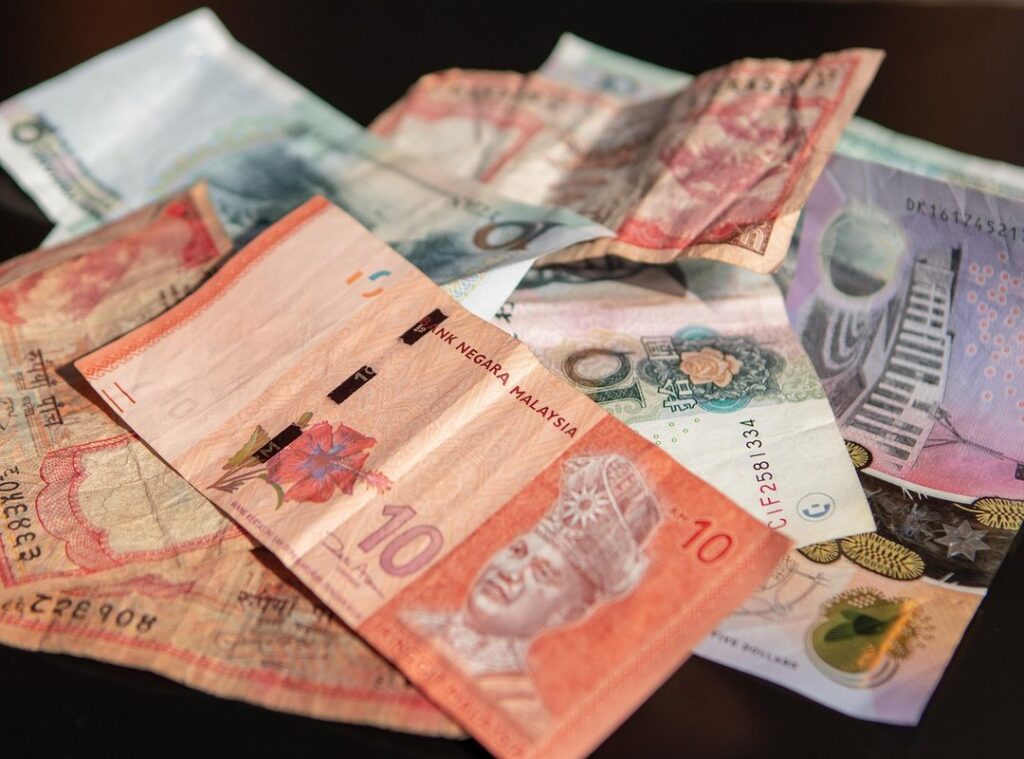
So, you want to know how much 3,500 Malaysian Ringgit (MYR) is in Indonesian Rupiah (IDR), right? 3500 ringgit berapa rupiah—that’s the question.
As of today, 3,500 MYR is about 12,250,000 IDR. But here’s the thing: this number can change fast. Currency values go up and down all the time, sometimes even by the hour.
You might see a different rate online, like on a financial news site. That’s usually the mid-market rate, which is kind of like the average. But when you go to a bank or a money changer, they’ll give you a different rate.
They’ve got to make a profit, after all.
In this guide, I’ll show you not just the current value but also how to do the math yourself. Plus, I’ll help you find the best rates so you can get the most for your money. Let’s dive in!
Understanding the Basics: What is the MYR to IDR Exchange Rate?
Let’s start with the basics. MYR stands for Malaysian Ringgit, and IDR stands for Indonesian Rupiah. Simple, right?
Now, what’s an exchange rate? It’s just the value of one country’s currency in relation to another’s. For example, how many Indonesian Rupiah you get for one Malaysian Ringgit.
- Mid-market rate (or interbank rate): This is the ‘real’ exchange rate that banks use to trade with each other. You can find this rate on platforms like Google or XE.com.
- Tourist rate (or buy/sell rate): This is the rate consumers actually get when they go to a money changer. The difference between the mid-market rate and the tourist rate is where money changers make their profit.
Think of it like this: the mid-market rate is like the wholesale price, and the tourist rate is like the retail price. Just as a store buys products at a lower price and sells them at a higher price, money changers do the same with currencies.
If you’re planning a trip and need to convert 3500 ringgit berapa rupiah, knowing these rates can help you get the best deal. Always check the mid-market rate before going to a money changer. This way, you’ll know if you’re getting a fair deal or if the rate is too far off.
Pro tip: Use a reliable app or website to check the current mid-market rate. It’s a quick and easy way to stay informed and avoid overpaying.
How to Calculate the Conversion Yourself: A Simple Step-by-Step Guide
Calculating the conversion from Malaysian Ringgit (MYR) to Indonesian Rupiah (IDR) is straightforward. Here’s a step-by-step guide to help you do it.
First, find the current MYR to IDR exchange rate. Reliable sources like Google Finance, XE.com, or Reuters can give you the most up-to-date rates.
Next, write down the formula: Total Rupiah = (Amount in Ringgit) x (Current MYR to IDR Rate).
Now, let’s walk through the calculation using 3500 ringgit berapa rupiah as an example. If the rate is 1 MYR = 3,650 IDR, then 3,500 MYR x 3,650 = 12,775,000 IDR.
Don’t forget to account for any fees. For instance, if there’s a 3% fee, you’d need to subtract that from your total. So, 12,775,000 IDR minus 3% (which is 383,250 IDR) would leave you with 12,391,750 IDR.
To double-check your manual calculation, use a reputable online currency converter. It’s a great way to ensure accuracy and give you peace of mind.
Key Factors That Make the Ringgit-Rupiah Rate Fluctuate

Currency values aren’t random. They’re influenced by a bunch of economic factors. Let’s dive into what makes the ringgit and rupiah tick.
First up, economic health. GDP growth, inflation, and employment rates in both Malaysia and Indonesia play a big role. If one country is booming, its currency tends to strengthen.
Conversely, if there’s economic trouble, the currency can weaken. Bfncreviews
Now, let’s talk about central bank policies. The interest rate decisions made by Bank Negara Malaysia (BNM) and Bank Indonesia (BI) are crucial. Higher interest rates can make a currency more attractive to foreign investors, while lower rates can have the opposite effect.
Trade and commodity prices also matter. Both countries are major exporters of commodities like palm oil. When global prices for these goods rise, it can boost their currencies.
For example, if palm oil prices go up, both the ringgit and rupiah might see some gains.
Political stability is another key factor. Stable governance and predictable economic policies can lead to a stronger, more trusted currency. Investors like predictability, and they’ll often favor a currency from a country with a stable political environment.
So, how does this all come together? Imagine you need to convert 3500 ringgit berapa rupiah. You’d want to check the current exchange rate, which is influenced by all these factors.
Pro tip: Keep an eye on economic news and central bank announcements. This can give you a heads-up on when the rate might be favorable for your conversion.
Where to Get the Best Rates for Your Currency Exchange
When it comes to exchanging currency, you’ve got a few options. Let’s break them down.
Banks are generally safe and reliable. But here’s the catch: they often have wider spreads and higher fees. This means you end up with a less favorable rate.
Not ideal, right?
Airport money changers are super convenient. You can exchange your cash on the spot. However, they typically offer the worst exchange rates.
Why? Because they know you’re in a hurry and might not have other options.
Licensed money changers in the city are a different story. They often provide the most competitive rates for cash exchanges. Just make sure to check for legitimacy and compare a few options.
It’s worth the extra effort.
Online money transfer services, like Wise or Remitly, usually offer rates closest to the mid-market rate. Plus, their fees are transparent. This makes them ideal for sending money directly to a bank account.
No hidden surprises there.
So, if you’re looking to convert 3500 ringgit berapa rupiah, consider these options carefully. Each has its pros and cons, and the best choice depends on your specific needs and circumstances.
Getting the Most Value for Your 3,500 Ringgit
The exact amount of Rupiah you get for 3500 ringgit berapa rupiah depends on the day’s rate and where you exchange it. Always check the mid-market rate before any transaction to have a baseline for what a ‘good’ rate looks like.
Factor in hidden fees and commissions, not just the advertised exchange rate. For larger amounts, comparing an online service with a local licensed money changer will almost always save you money over using a bank or airport kiosk.
 Ask Lee Graysonickster how they got into esports coverage and updates and you'll probably get a longer answer than you expected. The short version: Lee started doing it, got genuinely hooked, and at some point realized they had accumulated enough hard-won knowledge that it would be a waste not to share it. So they started writing.
What makes Lee worth reading is that they skips the obvious stuff. Nobody needs another surface-level take on Esports Coverage and Updates, Player Strategy Guides, Latest Gaming News. What readers actually want is the nuance — the part that only becomes clear after you've made a few mistakes and figured out why. That's the territory Lee operates in. The writing is direct, occasionally blunt, and always built around what's actually true rather than what sounds good in an article. They has little patience for filler, which means they's pieces tend to be denser with real information than the average post on the same subject.
Lee doesn't write to impress anyone. They writes because they has things to say that they genuinely thinks people should hear. That motivation — basic as it sounds — produces something noticeably different from content written for clicks or word count. Readers pick up on it. The comments on Lee's work tend to reflect that.
Ask Lee Graysonickster how they got into esports coverage and updates and you'll probably get a longer answer than you expected. The short version: Lee started doing it, got genuinely hooked, and at some point realized they had accumulated enough hard-won knowledge that it would be a waste not to share it. So they started writing.
What makes Lee worth reading is that they skips the obvious stuff. Nobody needs another surface-level take on Esports Coverage and Updates, Player Strategy Guides, Latest Gaming News. What readers actually want is the nuance — the part that only becomes clear after you've made a few mistakes and figured out why. That's the territory Lee operates in. The writing is direct, occasionally blunt, and always built around what's actually true rather than what sounds good in an article. They has little patience for filler, which means they's pieces tend to be denser with real information than the average post on the same subject.
Lee doesn't write to impress anyone. They writes because they has things to say that they genuinely thinks people should hear. That motivation — basic as it sounds — produces something noticeably different from content written for clicks or word count. Readers pick up on it. The comments on Lee's work tend to reflect that.