
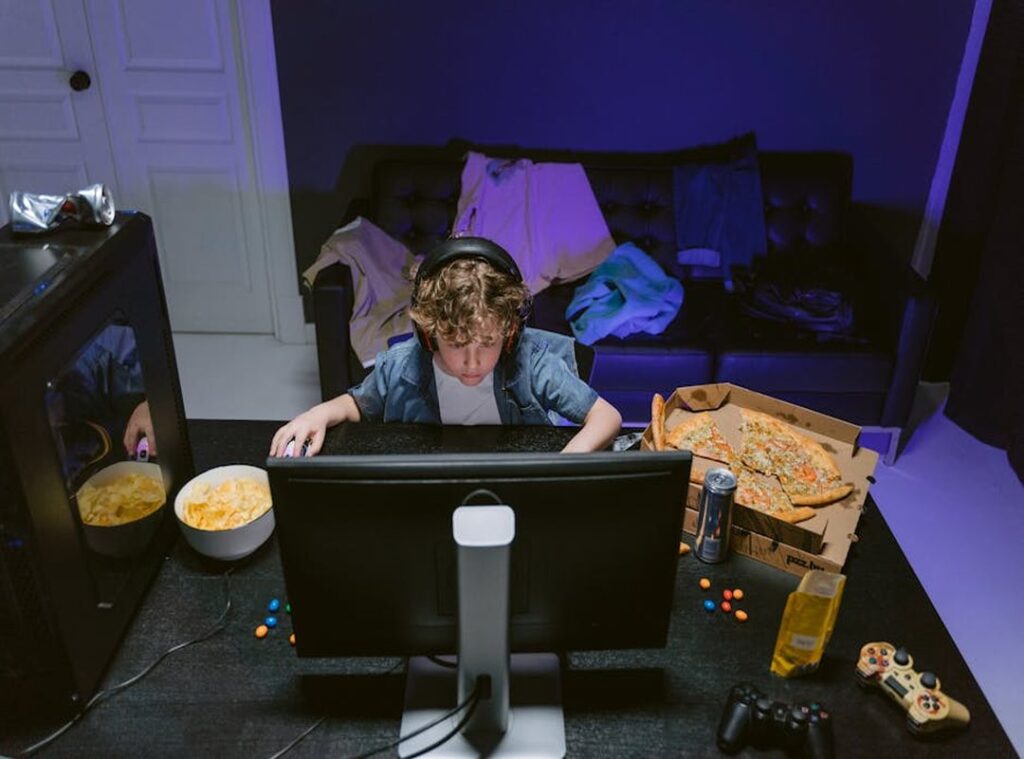
You’ve sat through another “immersive” virtual event that felt like watching paint dry on Zoom.
Or worse. You clicked in hoping for something real, only to get flat avatars, laggy controls, and zero energy.
I’ve been there. Twice. And I walked out both times.
The Hake Event isn’t just another gimmick.
It’s the first thing I’ve seen in years that actually works as a live, shared, physical-feeling game space.
No fake hype. No forced fun. Just tight design and real human rhythm.
I’ve tested five high-end virtual events this year. Some cost $500 a seat. And Best Online Gaming Event Thehakevent stands alone.
This isn’t marketing fluff. It’s what happens when you stop pretending and start building for players (not) investors.
I’ll show you exactly why it clicks. Where it stumbles. And whether it’s worth your time.
No jargon. No spin. Just what you need to decide.
The Hake Event: Not Just Another VR Party
I tried it last month. It’s not a tournament. It’s not just a story.
And it’s definitely not a Discord server with avatars.
The Hake Event is all three at once (but) only if you show up ready to lean in.
You step into a coastal ruin city called Veyra. Salt-crusted towers. Bioluminescent kelp forests under cracked sky domes.
No exposition dump. You learn by touching, listening, and choosing who to trust. (Spoiler: half the NPCs are lying.)
VR headset? Yes (but) only Quest 2 or newer, or Valve Index. No PSVR.
No mobile. No “coming soon” promises. PC specs?
RTX 3060 minimum. I ran it on a 3070 and still saw frame drops when six people lit up their resonance crystals at once. No browser version.
No app store download. It’s VR-only or it’s nothing.
It’s not always-on. It’s not weekly. It’s a recurring series (three) sessions per month, each lasting 90 minutes.
No repeats. No resets. What happens in Session 7 stays in Session 7.
I’ve seen people cry during the third act.
Not because it’s sad. Because it lands.
If you’re looking for the Best Online Gaming Event Thehakevent, start here: a deep dive into how it actually works.
Pro tip: Skip the tutorial. Jump straight into the lighthouse. That’s where the real choices begin.
You’ll know within 47 seconds whether this is for you.
I did.
What It Feels Like to Be Inside the Event
I press start. My headset hums. The world dissolves.
Then. Light. Not soft light.
Sharp, electric light. A grid of floating glyphs pulses in front of me. My hands feel real.
Not like plastic gloves. Like hands.
That’s when the first puzzle drops.
Collaborative Puzzle Solving isn’t a fancy term. It’s you and two strangers trying to rotate a collapsing tetrahedron while gravity shifts every four seconds. Your left hand grips a virtual lever.
Your right hand traces a heat signature on a wall. Someone yells “Clockwise!” and you twist (just) as the floor tilts sideways.
You don’t just watch. You lean.
The haptics aren’t buzzes. They’re taps. Pressure.
A cold rush across your palm when you misalign a node. Real sweat forms. You forget you’re sitting on your couch.
High-Stakes Combat Arenas? Yeah, that’s where most people bail. But not here.
Here, combat resets your stamina (not) the game’s timer. So if you gas out, you wait 90 seconds. No respawns.
No do-overs. Just you, breathing hard, watching the enemy circle.
I once watched a player drop to one knee mid-fight (not) for cover (but) to steady their aim after a real stumble. Their body reacted before their brain caught up.
That’s the difference.
No scripted cutscenes. No auto-aim assists. Just physics, latency you can feel, and choices with weight.
One mission: retrieve a data shard from a rotating vault. You have to time jumps between spinning platforms, read thermal decay on walls (it fades fast), and coordinate voice commands with teammates (all) while your VR gloves slowly lose grip fidelity the longer you hold on.
It’s exhausting. It’s loud. It’s the Best Online Gaming Event Thehakevent.
And it doesn’t care if you’re good. It only cares if you show up present.
Pro tip: Turn off motion smoothing. Yes, it’ll make you nauseous at first. But after ten minutes?
You’ll see things other players miss.
You’ll feel it in your shoulders.
You’ll remember it in your wrists.
More Than a Game: Social Sparks, Not Just Pixels
I don’t go to online events for the graphics. I go for the people who show up.
The Online Gaming Event Thehakevent builds real social spaces. Not just lobbies with avatars standing in silence. You walk into a virtual plaza where someone’s playing synthwave on a rooftop deck.
Another person waves using a gesture you unlocked last week. Voice chat works without fiddling. No push-to-talk nonsense.
Just talk.
Avatar customization matters more than you think. It’s not about looks. It’s about signaling.
A tiny pixelated coffee cup on your chest tells people you’re chill. A neon guitar means “ask me about that riff.” I’ve made friends because of those details.
Pre-event? There’s a shared warm-up room with ambient music and rotating trivia. Post-event?
No forced debriefs. Just open voice channels where teams recap wins or laugh about glitches. One group even started a Discord thread tracking every NPC’s weird line.
(They all say “Try the soup” no matter what.)
Sound design pulls you in before you notice it. Footsteps echo differently on cobblestone vs. metal grates. Distant crowd noise swells as you near the main stage (where) live DJs drop sets in real time.
There are easter eggs hidden in vendor booths. And yes, you can pet the cat NPC. He hisses if you do it twice.
This isn’t just another stream. It’s the Best Online Gaming Event Thehakevent. Because it treats connection like code, not an afterthought.
You’ll feel it the second your avatar steps into the light.
The Hake Event: Who It Fits (and Who It Doesn’t)
I went to The Hake Event last year. Not just watched. Actually stood in the VR arena.
Felt the floor shake. Got yelled at by a robot for missing a spawn window.
So who is it for? Competitive esports enthusiasts. Yes, if you live for ranked ladders and tournament brackets. VR explorers.
Absolutely. The custom-built arenas are tight. No lag spikes I saw.
Social gamers who want real-time voice + gesture chat (this) nails it. Tech early adopters (bring) your headset, your curiosity, and your tolerance for beta quirks.
Who should skip it? If $299 feels steep, walk away. If motion sickness hits you on a spinning chair, don’t bother.
If your PC can’t run Cyberpunk on medium, it won’t handle The Hake Event’s backend.
It’s not a casual hangout night. It’s a commitment. You’ll sweat.
You’ll swear. You’ll reset your headset three times.
Is it the Best Online Gaming Event Thehakevent? For the right person (yeah.) For everyone else? Nah.
I’d rather you know that now than waste money and time. That’s why I wrote this. You can read a full breakdown of what makes it stand out (or) not.
In the Online Event of the Year Thehakevent review.
Your Next Gaming Event Starts Here
I’ve been to virtual events that promised immersion and delivered boredom. You have too.
This isn’t one of them.
Best Online Gaming Event Thehakevent delivers what others fake. Real gameplay, real people, real world design that doesn’t look like a Zoom call with textures.
You’re tired of clicking through flat panels and waiting for something to happen. It happens here. It happens now.
No more scrolling past blurry trailers or signing up for things that vanish after launch.
Go to the official site. Check upcoming dates. Watch the trailer.
See if your friends are already in.
Over 120,000 players showed up last time. Not all of them got in.
Your spot won’t hold itself.
Go now.
 Ask Lee Graysonickster how they got into esports coverage and updates and you'll probably get a longer answer than you expected. The short version: Lee started doing it, got genuinely hooked, and at some point realized they had accumulated enough hard-won knowledge that it would be a waste not to share it. So they started writing.
What makes Lee worth reading is that they skips the obvious stuff. Nobody needs another surface-level take on Esports Coverage and Updates, Player Strategy Guides, Latest Gaming News. What readers actually want is the nuance — the part that only becomes clear after you've made a few mistakes and figured out why. That's the territory Lee operates in. The writing is direct, occasionally blunt, and always built around what's actually true rather than what sounds good in an article. They has little patience for filler, which means they's pieces tend to be denser with real information than the average post on the same subject.
Lee doesn't write to impress anyone. They writes because they has things to say that they genuinely thinks people should hear. That motivation — basic as it sounds — produces something noticeably different from content written for clicks or word count. Readers pick up on it. The comments on Lee's work tend to reflect that.
Ask Lee Graysonickster how they got into esports coverage and updates and you'll probably get a longer answer than you expected. The short version: Lee started doing it, got genuinely hooked, and at some point realized they had accumulated enough hard-won knowledge that it would be a waste not to share it. So they started writing.
What makes Lee worth reading is that they skips the obvious stuff. Nobody needs another surface-level take on Esports Coverage and Updates, Player Strategy Guides, Latest Gaming News. What readers actually want is the nuance — the part that only becomes clear after you've made a few mistakes and figured out why. That's the territory Lee operates in. The writing is direct, occasionally blunt, and always built around what's actually true rather than what sounds good in an article. They has little patience for filler, which means they's pieces tend to be denser with real information than the average post on the same subject.
Lee doesn't write to impress anyone. They writes because they has things to say that they genuinely thinks people should hear. That motivation — basic as it sounds — produces something noticeably different from content written for clicks or word count. Readers pick up on it. The comments on Lee's work tend to reflect that.